Best Doorway Pull-Up Bars of 2026: Picks That Fit Your Door Frame
A doorway pull-up bar needs no floor space, but not every bar suits every frame. These are the hook-over, tension and bracket bars we recommend for small homes.
 By Jordan Hayes
Updated November 5, 2026

A doorway pull-up bar is one of the few pieces of home gym equipment that takes up no floor space at all. It lives in a door frame while you train and comes down in seconds when you are done, which makes it a natural first purchase for an apartment.
The catch is that doorways vary, and a bar that suits one frame can be unsafe in another. We compared seven doorway bars across the three main mounting styles, judged them on the same criteria, and scored each one with the CGG Score. Start with the list, then use the buying guide to match a bar to your door.
Safety note: this guide is general product information, not medical or fitness advice. Talk with a doctor before starting a new exercise routine, and follow each manufacturer’s weight limit and setup instructions. See our health and safety policy.
| Award | Product | CGG Score About CGG ScoreThe CGG Score is a 0 to 10 rating calculated from each product's average Amazon customer rating, scaled so a 3.0 rating equals 6.2 and a 5.0 rating equals 9.4. Affiliate commissions never affect it. Learn more › | |
|---|---|---|---|
| Best Overall |
 AmazeFan Ergonomic Doorway Pull-Up Bar |
8.8/10 | Buy |
 Iron Gym Total Upper Body Doorway Bar |
8.6/10 | Buy | |
| Best Premium |
 KAKICLAY Multi-Grip Doorway Pull-Up Bar |
8.6/10 | Buy |
| Best Budget |
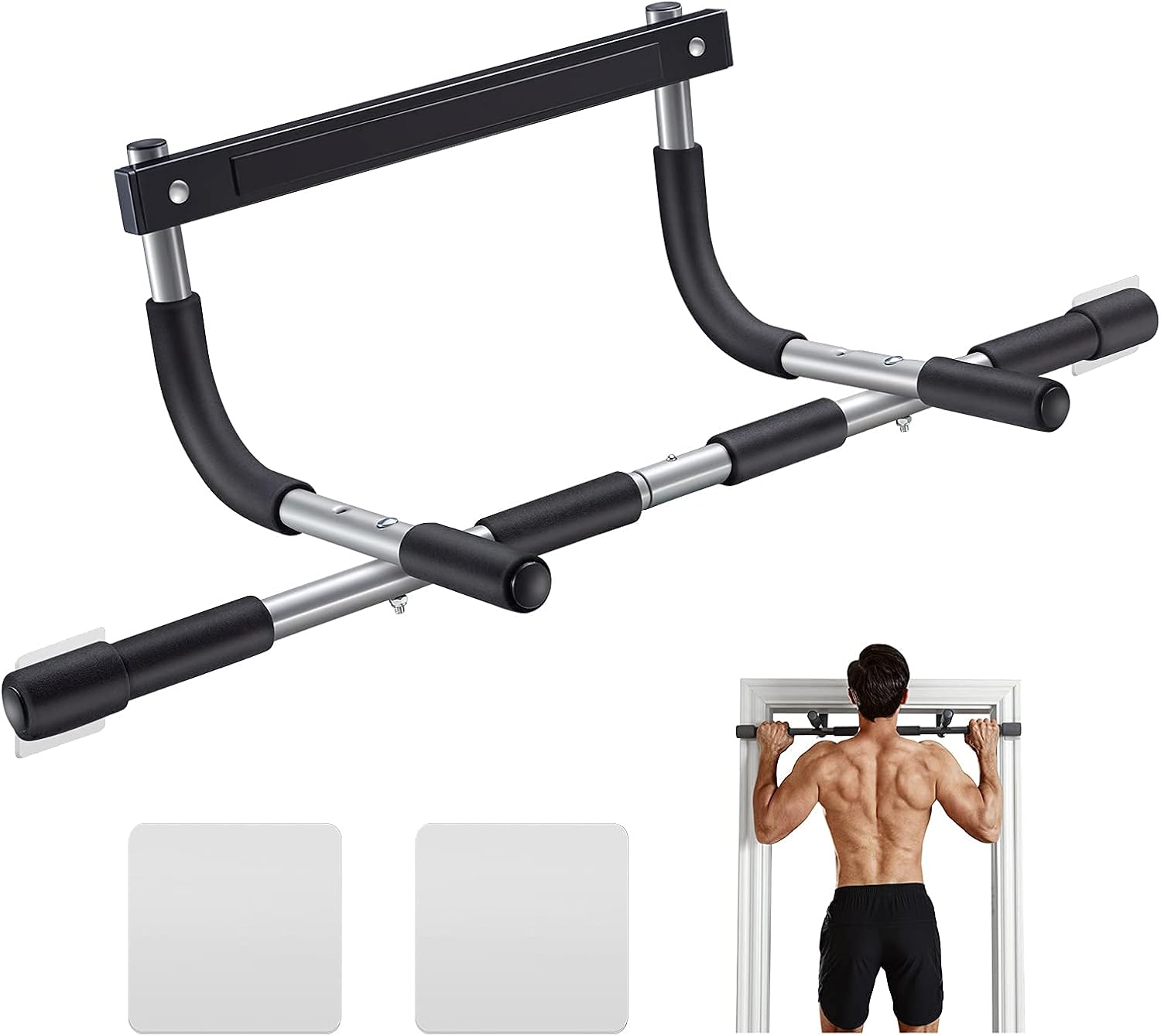 Ally Peaks Doorway Pull-Up Bar |
8.4/10 | Buy |
| Best Value |
 Sportneer No-Drill Tension Pull-Up Bar |
8.1/10 | Buy |
 ProsourceFit Doorway Pull-Up Bar |
8.4/10 | Buy | |
 PULLUP & DIP Doorway Pull-Up Bar |
8.4/10 | Buy |
AmazeFan Ergonomic Doorway Pull-Up Bar
A hook-over doorway bar with angled ergonomic grips and silicone pads that protect the door frame. Its short hook spacing fits narrow doors and doors set close to a corner.
Pros
- Angled grips for wide and neutral pulls
- Fits door widths of about 21.7 to 36.2 inches
- Silicone pads protect the door frame
- Listed 400 lb max weight
Cons
- Needs a sturdy frame with trim to hook over
- About 8.5 lb, bulkier to store than a tension bar
Iron Gym Total Upper Body Doorway Bar
A long-running leverage-style doorway bar that hooks over the trim and also works on the floor for push-ups and dips. Three grip positions cover wide, narrow and neutral pulls.
Pros
- Hooks on and off the doorway with no screws
- Wide, narrow and neutral grip positions
- Doubles as a floor station for push-ups
- Light at about 4.7 lb
Cons
- Listed 300 lb max weight
- Needs sturdy trim to hook over
KAKICLAY Multi-Grip Doorway Pull-Up Bar
A multi-grip leverage bar with a raised upper bar for taller users and included suspension straps. Larger hooks and short hook spacing help it fit more doorways, including ones near a corner.
Pros
- Raised bar helps taller users
- Several grip zones plus suspension straps
- Listed 440 lb max weight
- Silicone door frame protectors
Cons
- About 11.6 lb, the heaviest bar here
- Needs frame trim up to about 3.5 inches tall
Ally Peaks Doorway Pull-Up Bar
A leverage-style bar made from thickened steel with silicone frame protectors and multiple grips. It fits standard doorways about 24 to 32 inches wide with trim up to 3.75 inches tall.
Pros
- Listed 440 lb max weight
- Silicone pads where the bar meets the frame
- Multiple grips for pulls and push-ups
- Entry-level price
Cons
- Narrower door width range than some picks
- Check trim height and thickness before buying
Sportneer No-Drill Tension Pull-Up Bar
A straight tension bar that locks inside the door frame with large anti-slip pads, so nothing hooks over the trim. It suits doorways without trim, but only solid wood frames 29.5 to 37 inches wide.
Pros
- Mounts inside the frame, no hooks or screws
- Large anti-slip end pads
- Listed as ASTM and EN957 certified
- Straight bar stays out of the way above the door
Cons
- Solid wood door frames only
- Weight limit is inconsistent across the listing
- Single straight grip
ProsourceFit Doorway Pull-Up Bar
A simple extendable bar that fits inside door frames from 24 to 39 inches and comes with mounting brackets and screws. It is a low-profile option for a doorway you are happy to fix hardware to.
Pros
- Fits frames from 24 to 39 inches wide
- Brackets and screws for a fixed mount
- Very light at about 2.8 lb
- Foam grips
Cons
- Lowest listed limit here at 220 lb
- Uses screws, so it marks the frame
- Single straight grip
PULLUP & DIP Doorway Pull-Up Bar
A cross-braced hook-over bar with wide, narrow, chin-up and neutral grips, plus an included assistance band for building up to full pull-ups. An optional dip module attaches separately.
Pros
- Four grip types including neutral
- Includes a pull-up assistance band
- Fits openings about 25.6 to 37.4 inches
- Padding protects door and trim
Cons
- Listed 240 lb max weight
- Premium price for a doorway bar
- Dip module sold separately
How We Picked These Doorway Pull-Up Bars
We started from doorway bars sold on Amazon with a strong base of verified owner ratings, then compared them on what decides whether a bar works in your home:
- Mounting style: hook-over leverage, tension inside the frame, or brackets with screws.
- Door fit: the frame widths, depths and trim heights each brand lists.
- Weight limit: the listed maximum, which ranges from 220 lb to 440 lb in this group.
- Grip options: wide, narrow, neutral and angled grips, which change how an exercise feels.
- Frame protection: padding where the bar touches the door frame and wall.
- Storage: weight and how flat the bar sits when it comes down.
Specifications come from each listing and manufacturer information; where a listing contradicts itself, we say so instead of quoting a number. Our full method is on the How We Review page.
Doorway Pull-Up Bars Buying Guide
Three Ways a Doorway Bar Mounts
Hook-over leverage bars rest on the top of the door trim and brace against the wall above. Your body weight pulls them tighter, so they need no screws, but they only work on frames with trim sturdy enough to hook over. Most of our picks use this design.
Tension bars twist outward until their end pads press against the inside of the frame. They suit doorways without trim, but they depend on friction and a strong frame; the Sportneer here is rated for solid wood frames only.
Bracket-mounted bars, like the ProsourceFit, sit in cups that you screw into the frame. They are the most secure of the three, but they leave screw holes, so check your lease before choosing one.
Measure Your Door Frame First
Each bar lists the door widths it fits, and hook-over bars also list the frame depth and trim height they can handle. Measure the inside width of the opening, the depth of the wall, and the height of the trim before you order.
Doors set close to a corner can block a hook-over bar. Some designs, such as the AmazeFan and KAKICLAY, shorten the distance between hooks to fit those doorways.
Weight Limits and Your Door
Listed limits in this guide run from 220 lb to 440 lb. That number describes the bar, not your door frame, and a weak or hollow frame can fail long before the bar does.
Before your first pull-up, follow the manufacturer’s check: hang a little weight at a time and look for movement or cracking around the trim. If the frame flexes, stop and choose a different doorway or a freestanding power tower.
Grip Options
A straight bar covers basic pull-ups and chin-ups. Multi-grip bars add neutral handles, where your palms face each other, and angled ends that many people find easier on the wrists and shoulders.
If you are working toward your first pull-up, a bar that includes or accepts an assistance band, like the PULLUP & DIP, lets you build up with support.
Protecting Your Door Frame
Hook-over bars put pressure on the trim and the wall above it. Silicone or foam pads at those contact points help prevent dents and paint damage, and several picks here include them. Tension bars can leave marks inside the frame if the pads slip, so recheck them before each session.
Storage and Portability
Doorway bars weigh from under 3 lb to about 11.6 lb in this group. Leverage bars lift off the frame in seconds and slide under a bed or into a closet, while tension and bracket bars usually stay mounted between sessions.
Who Should Skip a Doorway Pull-Up Bar
- Renters with hollow or metal door frames, or frames with thin, decorative trim.
- Users near or above a bar’s listed limit, who need a sturdier wall-mounted bar or power tower.
- Anyone who wants dips and leg raises as well, who may get more from a power tower.
- People in homes without a spare doorway, since the bar blocks the door while it is mounted.
Why You Should Trust Us
CompactGymGuide compares doorway pull-up bars for small homes using published specifications, manufacturer documentation, and patterns in verified owner feedback. Every product in this guide was judged against the same criteria, and each one carries a CGG Score, a 0 to 10 rating calculated from its average Amazon customer rating with a formula we publish on our How We Review page.
We do not conduct our own product trials; our evaluations are grounded in research, published data, and verified buyer feedback. We may earn a commission when you buy through our links, but that never changes which products we include or how they rank. Details are in our affiliate disclosure.
Final Thoughts
For most apartments with standard trimmed doorways, a padded hook-over bar is the easiest place to start. Choose a tension or bracket bar only when your doorway has no trim to hook over, and confirm the frame material first.
- Best Overall: AmazeFan Ergonomic Doorway Pull-Up Bar, the highest-rated bar here, with angled grips, frame pads and a hook spacing that fits narrow doors.
- Best Classic Leverage Bar: Iron Gym Total Upper Body Doorway Bar, a simple three-grip bar that also works on the floor for push-ups.
- Best for Taller Users: KAKICLAY Multi-Grip Doorway Pull-Up Bar, with a raised bar, several grip zones and included straps.
- Best for Doorways Without Trim: Sportneer No-Drill Tension Pull-Up Bar, which mounts inside solid wood frames with no hooks or screws.
- Best for Building Up to Pull-Ups: PULLUP & DIP Doorway Pull-Up Bar, with four grip types and an included assistance band, within a 240 lb limit.
See more options in our pull-up bars section, or explore other bodyweight training equipment for small spaces.
Frequently Asked Questions
Will a doorway pull-up bar damage my door frame?
A hook-over bar presses on the trim and the wall above it, so padding at those points matters. Bracket bars use screws and leave holes. Tension bars can mark the inside of the frame if they slip. Choose a bar with frame pads and recheck the fit before each use.
How do I know if my doorway will work?
Measure the inside width of the opening, the wall depth and the trim height, then compare them with the ranges each brand lists. Avoid hollow, metal or damaged frames, and doorways with thin decorative trim.
What is the difference between a leverage bar and a tension bar?
A leverage bar hooks over the trim and uses your body weight to lock in place. A tension bar twists outward to press against the inside of the frame and relies on friction, so it needs a solid frame that will not flex.
Can I take a doorway pull-up bar down after each workout?
Yes. Hook-over bars lift off in seconds and store flat. Tension bars can be removed but need to be re-tightened each time, and bracket bars are designed to stay in place.
Can I use a doorway pull-up bar if I cannot do a pull-up yet?
Yes. Start with hangs and slow lowering from the top, or use an assistance band looped over the bar. One pick in this guide includes a band in the box.
About the author
Jordan Hayes is an editor at CompactGymGuide covering home gym equipment for small spaces, from folding cardio machines to adjustable weights. He researches product specifications, manufacturer documentation, and verified owner feedback to build practical buying guides for people who train at home.