Best Rubber Gym Flooring in 2026: Rolls, Stall Mats and Tiles
Rubber is the go-to floor for lifting at home. We compared rubber rolls, stall mats and tiles on thickness, coverage, weight and owner ratings.
 By Jordan Hayes
Updated November 5, 2026
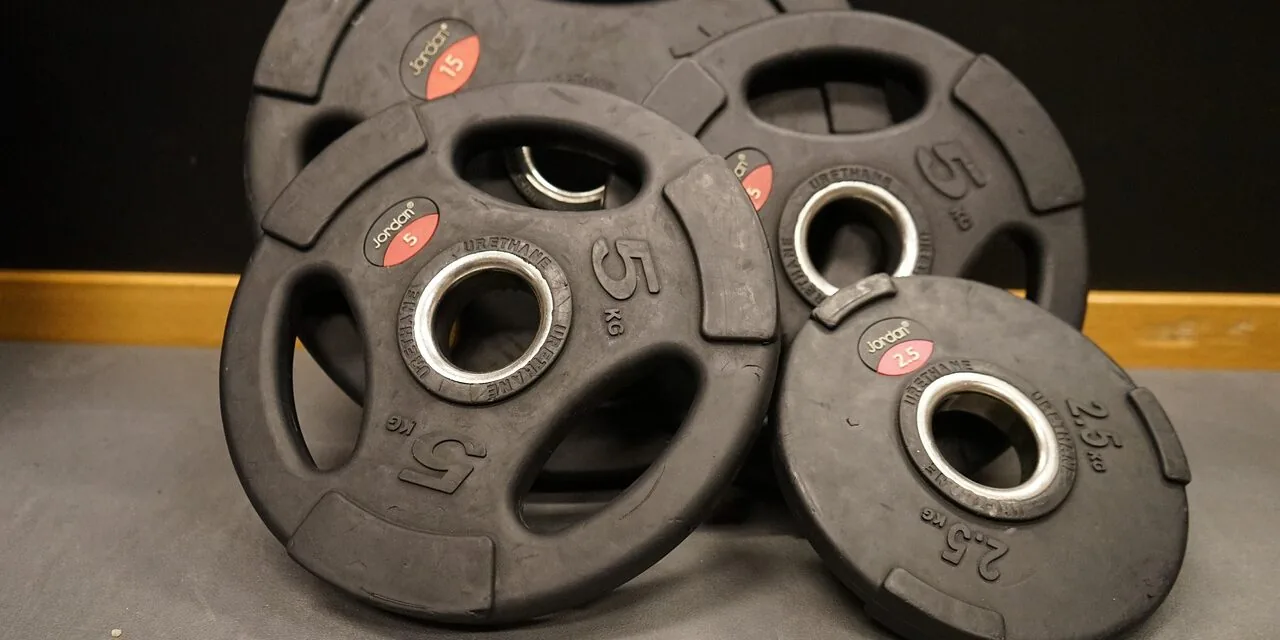
Rubber is the standard floor for lifting at home: it protects concrete and wood from dropped weights, keeps racks and benches from sliding, and wipes clean. It comes in three main forms, rolls, single mats (often sold as horse stall mats) and tiles, and the right one depends on how much floor you cover and how heavy your training is.
We compared six rubber flooring options on thickness, coverage, weight, seams and owner ratings, and scored each with the CGG Score. For foam and mixed options, see our home gym flooring guide.
| Award | Product | CGG Score About CGG ScoreThe CGG Score is a 0 to 10 rating calculated from each product's average Amazon customer rating, scaled so a 3.0 rating equals 6.2 and a 5.0 rating equals 9.4. Affiliate commissions never affect it. Learn more › | |
|---|---|---|---|
| Best Overall |
 American Floor Mats 3/8-Inch Rubber Roll |
8.9/10 | Buy |
| Best Budget |
 MSI Utility Rubber Stall Mat (3/4 Inch) |
8.8/10 | Buy |
| Best Value |
 IncStores 1/4-Inch Tough Rubber Roll |
8.3/10 | Buy |
| Best Premium |
 Rubber-Cal Elephant Bark Rubber Flooring Roll |
8.6/10 | Buy |
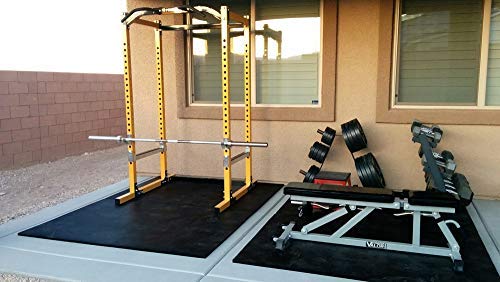 American Floor Mats 3/4-Inch Stall Tiles |
8.6/10 | Buy | |
 Genaflex 8 mm Rubber Gym Flooring Roll |
8.3/10 | Buy |
American Floor Mats 3/8-Inch Rubber Roll
A solid rubber roll about 3/8 inch thick that covers 32 square feet in one piece. It is built for floor protection under weights and machines, and the roll format leaves fewer seams than tiles.
Pros
- One 4 x 8 ft piece, few seams
- Solid rubber, about 3/8 inch
- Suits weights and machines
- Wipes clean
Cons
- Heavy and awkward to carry in
- Listing gives two thickness figures
- May smell of rubber at first
MSI Utility Rubber Stall Mat (3/4 Inch)
A heavy 3/4-inch rubber stall mat, the thickest option here, of the kind many home lifters use under racks and benches. It weighs about 69 lb and wipes or brushes clean.
Pros
- 3/4 inch dense rubber
- Dense rubber for heavy equipment
- Wipes or brushes clean
- Suits racks and benches
Cons
- About 69 lb, hard to move
- Listing gives two different sizes
- Rubber odor likely at first
IncStores 1/4-Inch Tough Rubber Roll
A recycled rubber roll, 1/4 inch thick, sold in 3 and 4 foot widths and several lengths. IncStores says it is made in the USA. Rolls cover an area with fewer seams than tiles and can be cut to fit.
Pros
- Made in the USA per listing
- 3 or 4 ft wide, several lengths
- Fewer seams than tiles
- Cuts to fit
Cons
- 1/4 inch is thin for dropped weights
- Heavy rolls to carry in
Rubber-Cal Elephant Bark Rubber Flooring Roll
A recycled rubber roll about 3/16 inch thick that covers a long strip in one piece, sold in six colors. It installs without adhesive and resists water and UV, so it also works on patios and in basements.
Pros
- Large one-piece roll, about 4 x 20 ft
- No adhesive needed
- Six color options
- Water and UV resistant
Cons
- Thin for heavy weights
- About 77 lb to maneuver
American Floor Mats 3/4-Inch Stall Tiles
Heavy 3/4-inch rubber stall tiles, 24 x 24 inches each, made in the US per the listing and sold as corner, edge and center tiles that form larger areas.
Pros
- 3/4 inch solid rubber
- Made in the US per listing
- 2 x 2 ft tiles, easier to handle
- Wipes or brushes clean
Cons
- Sold per tile, build your own set
- Rubber smell when new
Genaflex 8 mm Rubber Gym Flooring Roll
A commercial-style 8 mm (about 5/16 inch) recycled rubber roll with a colored fleck, listed at 4 x 20 feet and about 140 lb. It is marketed as stain-resistant and non-slip.
Pros
- 8 mm, commercial gym look
- Large 4 x 20 ft roll
- Fleck color options
- Covers a full room with few seams
Cons
- About 140 lb, needs two people
- Highest listing price here
Rubber Gym Flooring Compared
| Product | Format | Thickness | Listed Size | Weight | Best For |
|---|---|---|---|---|---|
| American Floor Mats Roll | Roll | 3/8 in (listing also shows 0.31 in) | 4 x 8 ft | Not stated | Weights and machines |
| MSI Utility Mat | Stall mat | 3/4 in | About 3.5 x 6 ft per title (specs differ) | About 69 lb | A lifting spot or rack |
| IncStores Tough Roll | Roll | 1/4 in | 3 or 4 ft wide, several lengths | Varies | Cardio and light weights |
| Rubber-Cal Elephant Bark | Roll | 3/16 in | 4 x 20 ft | About 77.5 lb | Large areas, patios |
| American Floor Mats Stall Tiles | Tiles | 3/4 in | 2 x 2 ft each | Not stated | Building a platform piece by piece |
| Genaflex 8 mm | Roll | 8 mm (about 5/16 in) | 4 x 20 ft | About 140 lb | Full rooms, commercial look |
Figures come from each Amazon listing at the time of our review. Where a listing gives conflicting figures, we note it.
How We Picked These Rubber Floors
- Solid rubber, not foam with a rubber top or PVC. We left out a well-rated PVC mat for that reason.
- Thickness for the job, from 3/16 inch for cardio to 3/4 inch for dropped weights.
- Format and coverage: rolls, mats and tiles.
- Owner ratings through the CGG Score.
Our full method is on the How We Review page.
Rubber Gym Flooring Buying Guide
Thickness by Training Type
- 3/16 to 1/4 inch: treadmills, bikes, bodyweight work and light dumbbells.
- 3/8 inch to 8 mm: general strength training and racks without heavy drops.
- 3/4 inch: deadlifts and dropped weights. Stall mats and stall tiles are the usual choice.
Rolls, Mats or Tiles
Rolls cover large areas with few seams but are heavy; the 4 x 20 ft rolls here weigh about 77 to 140 lb. Stall mats are thick and cheap per square foot but heavy and awkward. Tiles are easiest to carry and arrange, and you can replace one damaged piece.
Smell
Recycled rubber usually smells strongly when new. Unrolling it in a garage or ventilated room for a few days and washing it with mild soap and water helps.
Over Carpet or in a Garage
For carpeted rooms, firm tiles work better than thin rolls; see our gym flooring over carpet. For concrete garages, see our garage gym flooring picks.
Who Should Skip Rubber Flooring
- Renters who need to move often, who may prefer lighter exercise mats.
- Yoga and floor-work users, who will be more comfortable on foam.
Why You Should Trust Us
CompactGymGuide compares rubber gym flooring for small homes using published specifications, manufacturer documentation, and patterns in verified owner feedback. Every product in this guide was judged against the same criteria, and each one carries a CGG Score, a 0 to 10 rating calculated from its average Amazon customer rating with a formula we publish on our How We Review page.
We do not conduct our own product trials; our evaluations are grounded in research, published data, and verified buyer feedback. We may earn a commission when you buy through our links, but that never changes which products we include or how they rank. Details are in our affiliate disclosure.
Final Thoughts
Match thickness to your heaviest lift, then choose a roll for coverage or tiles for easy handling.
- Best Overall: American Floor Mats 3/8-Inch Roll, the highest rating here, with a 4 x 8 ft piece that suits weights and machines.
- Best Budget: MSI 3/4-Inch Utility Mat, a single thick mat for one lifting spot or rack.
- Best Value: IncStores 1/4-Inch Tough Roll, made in the USA per the listing and sold in several widths and lengths.
- Best Premium: Rubber-Cal Elephant Bark, a 4 x 20 ft roll in six colors for large areas and patios.
- Best Tiles: American Floor Mats 3/4-Inch Stall Tiles, 2 x 2 ft pieces you can build into a platform.
- Best Commercial Look: Genaflex 8 mm Roll, a fleck-finish roll for a full room.
Browse more in our gym flooring section.
Frequently Asked Questions
How thick should rubber gym flooring be?
About 1/4 inch for cardio and light weights, 3/8 inch to 8 mm for general strength training, and 3/4 inch where you drop heavy weights.
Are horse stall mats good for a home gym?
Yes, they are a common low-cost choice for lifting areas: thick, dense and durable. They are heavy and may smell of rubber at first.
Is rubber flooring better than foam tiles?
Rubber is denser and handles heavy weights and equipment better. Foam is lighter, softer and cheaper, which suits floor exercise and light use.
About the author
Jordan Hayes is an editor at CompactGymGuide covering home gym equipment for small spaces, from folding cardio machines to adjustable weights. He researches product specifications, manufacturer documentation, and verified owner feedback to build practical buying guides for people who train at home.